When planning a new garden patio in Dublin, one of the biggest choices is the surface material. Two of the most popular options are porcelain paving and natural stone. Both can create a beautiful outdoor space, but they perform differently, cost differently, and require different levels of maintenance over time.
For homeowners in Dublin, this decision is especially important because Irish weather can be hard on outdoor surfaces. Rain, frost, damp conditions, shade, moss, and regular foot traffic all affect how a patio looks and performs after installation. A patio might look perfect on day one, but the real test is how it handles the next five, ten, or fifteen years.
This guide compares porcelain and natural stone in a practical way, focusing on cost, durability, maintenance, appearance, and long-term value for Dublin gardens.
What Is Porcelain Paving?
Porcelain paving is made from refined clay and minerals that are fired at very high temperatures. This process creates a dense, hard-wearing tile that is suitable for outdoor use. Outdoor porcelain paving is designed to handle weather, foot traffic, and regular garden use.
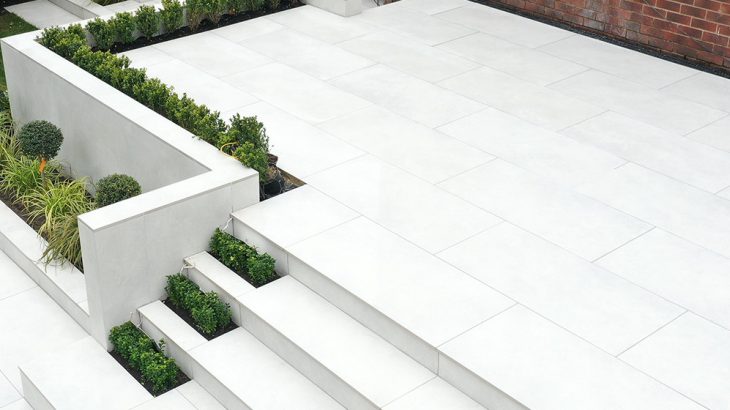
Many homeowners choose porcelain paving in Ireland because it offers a clean, modern look with low maintenance. It is available in many colours, finishes, and styles, including designs that look like natural stone, concrete, or wood.
Porcelain is often used for patios, garden paths, outdoor dining areas, steps, and modern landscaped spaces. Because it is manufactured, the finish is consistent. This means the slabs usually have a uniform size, colour, and surface texture.
For Dublin gardens, this can be a big advantage. Porcelain works well in both small city gardens and larger suburban outdoor areas because it gives a sharp, neat finish.
What Is Natural Stone Paving?
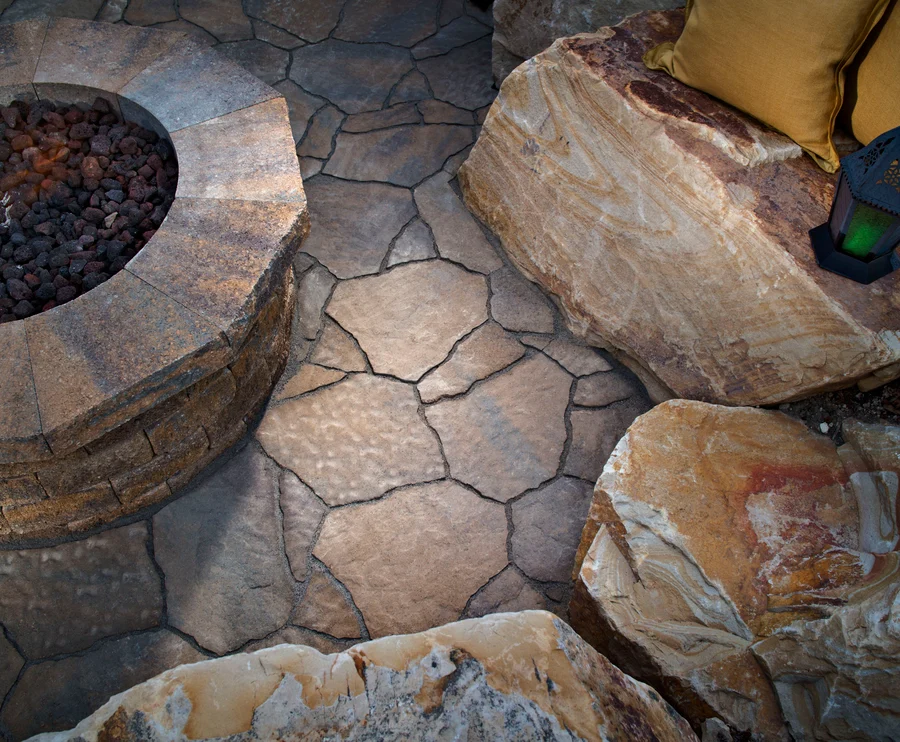
Natural stone is taken from the earth and cut into paving slabs. Common options include sandstone, limestone, granite, and slate. Each type of stone has its own colour, texture, and character.
The main appeal of natural stone is its unique appearance. No two slabs are exactly the same. This gives a patio a more rustic and natural finish. For older homes, country-style gardens, or traditional outdoor spaces, natural stone can look very fitting.
However, because it is a natural material, it can vary in thickness, texture, colour, and porosity. Some stones absorb more water than others. Some need more sealing. Some are more likely to stain, fade, or become slippery if not properly maintained.
Natural stone can be beautiful, but it usually needs more care than porcelain.
Cost Comparison: Porcelain vs Natural Stone
Cost is often one of the first things homeowners ask about. The truth is that the total price depends on the product, the size of the area, the preparation required, access to the garden, drainage, and the quality of installation.
In general, porcelain paving can sometimes cost more for the material itself, especially if you choose a premium range. However, it often gives strong long-term value because it needs less maintenance.
Natural stone can vary widely in price. Some sandstone options may be more affordable, while premium granite or limestone can be more expensive. The installation can also take more time if the stone varies in thickness or needs extra preparation.
Here is a simple comparison:
Feature | Porcelain Paving | Natural Stone |
Material cost | Medium to high | Low to high depending on stone |
Installation | Needs skilled installation | Also needs skilled installation |
Maintenance cost | Low | Medium to high |
Sealing | Usually not required | Often recommended |
Cleaning | Easier | Can require more care |
Long-term value | Strong | Depends on maintenance |
The cheapest option is not always the best option. In Dublin gardens, long-term performance matters. A patio that needs regular sealing, deep cleaning, or repair may cost more over time than expected.
Performance in Dublin Weather
Dublin weather is one of the main reasons many homeowners now consider porcelain for outdoor spaces. Rain is common, and many gardens have shaded areas where moss and algae can grow. Frost can also affect surfaces during colder months.
Porcelain paving is dense and has very low water absorption. This means it does not take in much moisture. As a result, it is less likely to suffer from water-related staining, frost damage, or surface breakdown.
Natural stone behaves differently depending on the type of stone. Some stones absorb more moisture, which can lead to staining, algae growth, or frost damage if the stone is not properly installed and maintained. Over time, some natural stone can also change colour due to weather exposure.
For Dublin gardens, porcelain usually offers more predictable performance. It is especially suitable for homeowners who want a patio that looks clean with less effort.
Maintenance: Which Is Easier to Look After?
Maintenance is one of the biggest differences between porcelain and natural stone.
Porcelain patios are generally low maintenance. Most of the time, they can be cleaned with warm water, a mild outdoor cleaner, and a brush. Because porcelain is less porous, dirt and stains are less likely to soak into the surface.
This makes porcelain a good option for families, rental properties, commercial outdoor areas, and anyone who wants a neat garden surface without constant upkeep.
Natural stone usually needs more care. Depending on the type of stone, it may need sealing to help protect it from stains and moisture. It may also need more regular cleaning to prevent moss, algae, and discolouration.
For example, sandstone can look beautiful, but it can also absorb water and stain more easily than porcelain. Limestone can offer a very attractive finish, but some types may fade or lighten over time. Granite is very strong, but usually costs more.
If you enjoy the natural ageing of stone, this may not be a problem. But if you want your patio to keep a cleaner and more consistent look, porcelain is usually easier to manage.
Appearance and Style
Both materials can look excellent, but they create different types of finish.
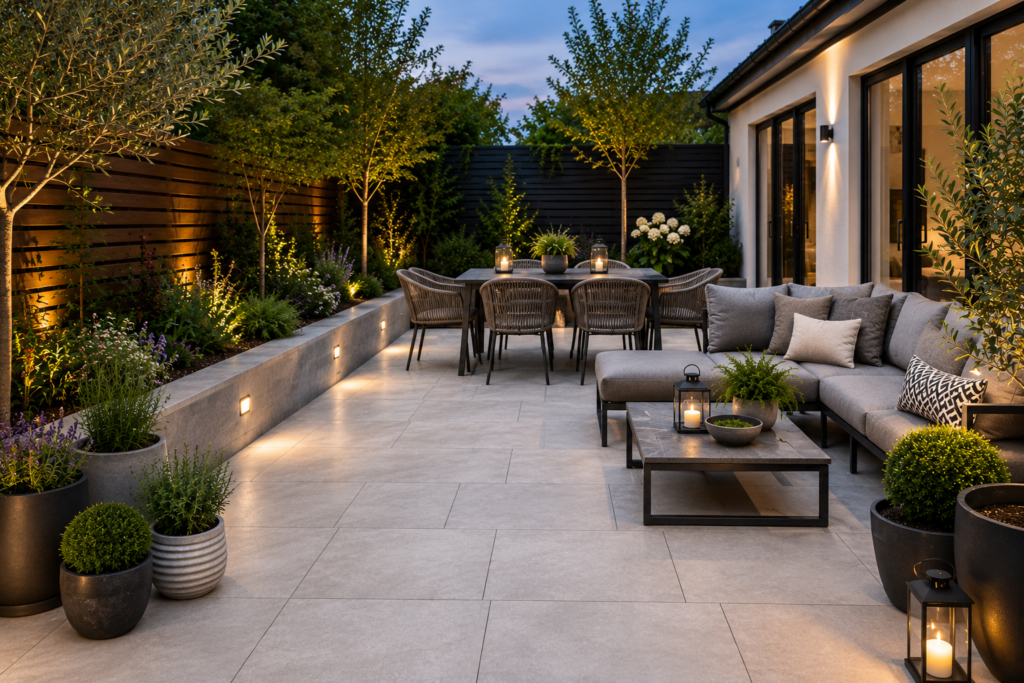
Porcelain paving is ideal if you want a clean, modern, and consistent look. It works well with contemporary garden designs, outdoor kitchens, seating areas, and open-plan homes where the indoor and outdoor spaces connect.
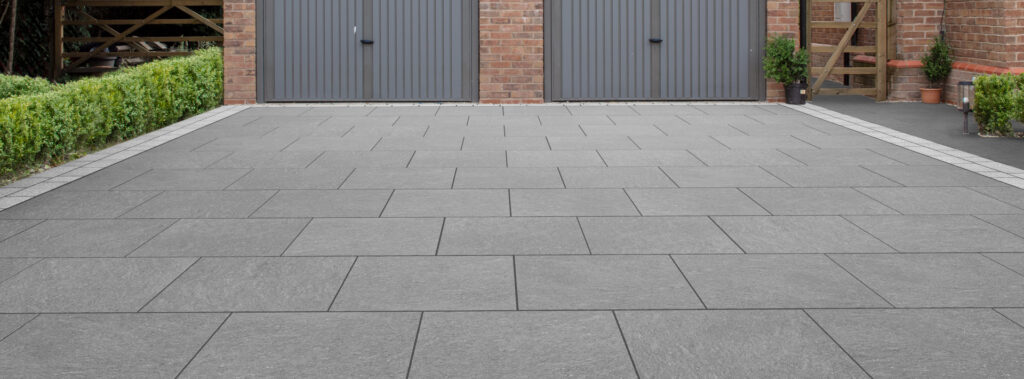
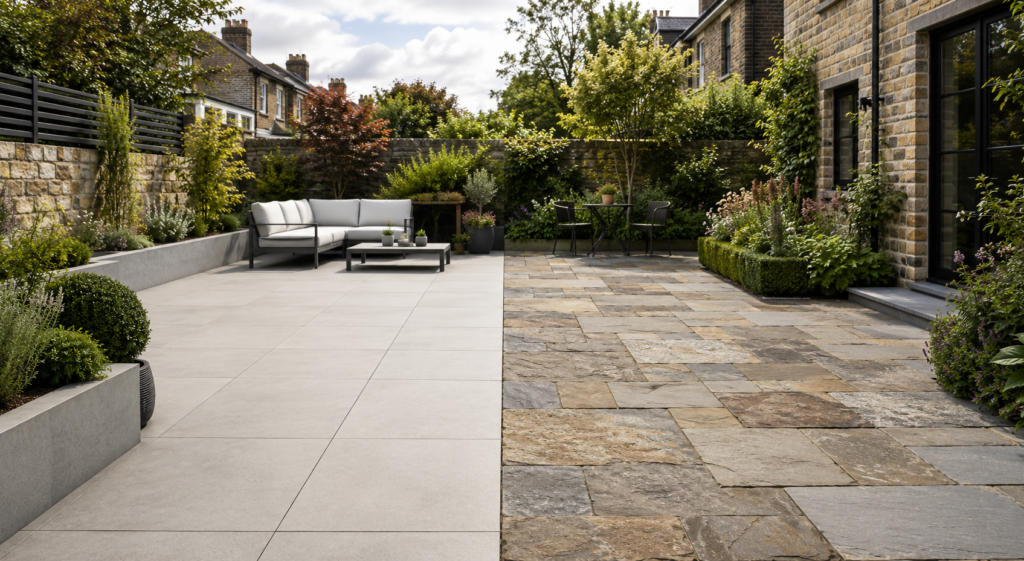
Porcelain is also available in many designs. You can choose stone-effect porcelain if you like the look of natural stone but want easier maintenance. You can also choose concrete-effect porcelain for a modern garden, or warmer tones for a softer outdoor space.
Natural stone has a more organic look. It is full of natural variation, which many people love. It suits traditional homes, cottage gardens, and spaces where you want a more rustic finish.
The choice comes down to the style you want. If you want a natural, aged look, natural stone may appeal to you. If you want a sharper, cleaner, and more uniform finish, porcelain paving is likely the better fit.
Slip Resistance and Safety
Outdoor paving should always be chosen with slip resistance in mind. This is especially important in Ireland because patios are often wet.
Outdoor porcelain paving usually comes with a textured anti-slip surface. Many quality outdoor porcelain slabs are designed specifically for external use and offer good grip under normal wet conditions.
Natural stone can also provide good grip, but this depends on the type of stone and surface finish. Some stone can become slippery when wet, especially if moss or algae builds up. Regular cleaning is important to keep natural stone safe.
For any patio, proper installation, drainage, and maintenance all matter. Even a good paving material can become slippery if water sits on the surface or if the area is not cleaned when needed.
For Dublin gardens with shade, trees, or damp corners, porcelain often has an advantage because it is easier to keep clean.
Durability and Long-Term Performance
Porcelain is highly durable. It resists scratches, stains, frost, and fading better than many natural materials. It is also strong enough for normal patio use, outdoor furniture, barbecues, planters, and regular foot traffic.
Natural stone can also last for many years when installed and maintained properly. In fact, some stone patios can age beautifully. However, the performance depends heavily on the stone type, quality, installation method, and maintenance routine.
The main issue with natural stone is variation. Some types are much tougher than others. Some are more porous. Some stain more easily. Some weather faster. This does not mean natural stone is bad, but it does mean you need to choose carefully.
For homeowners who want predictable results with less maintenance, porcelain paving is usually the more practical option.
Installation Matters for Both Materials
The material is only one part of the job. The installation is just as important.
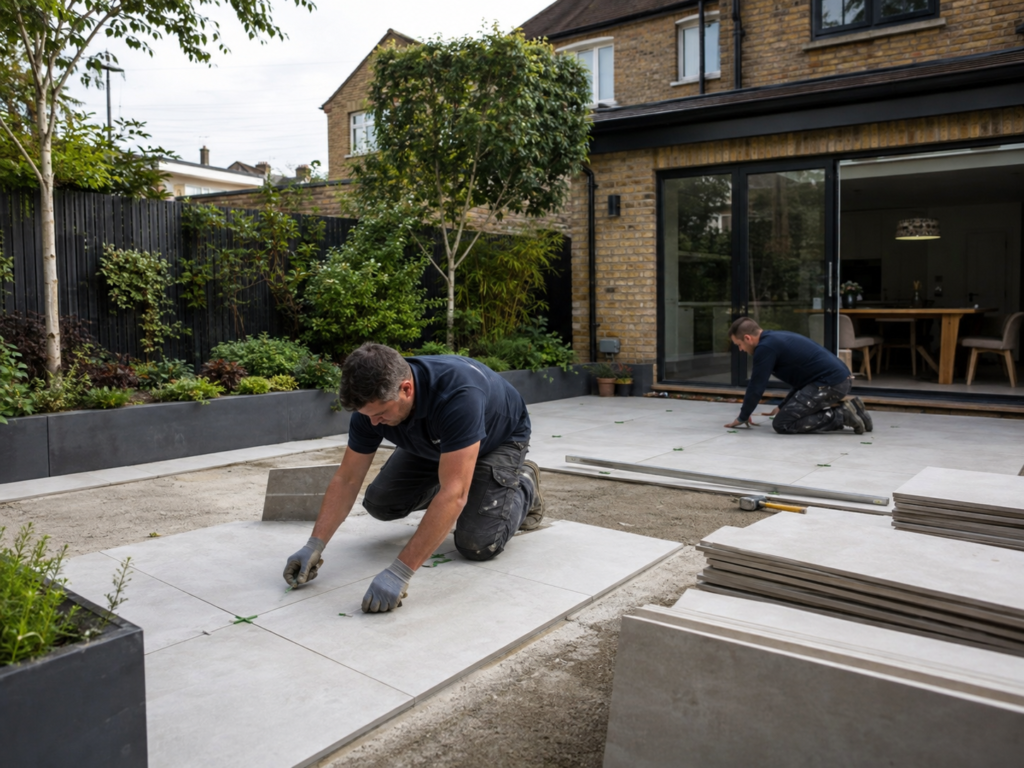
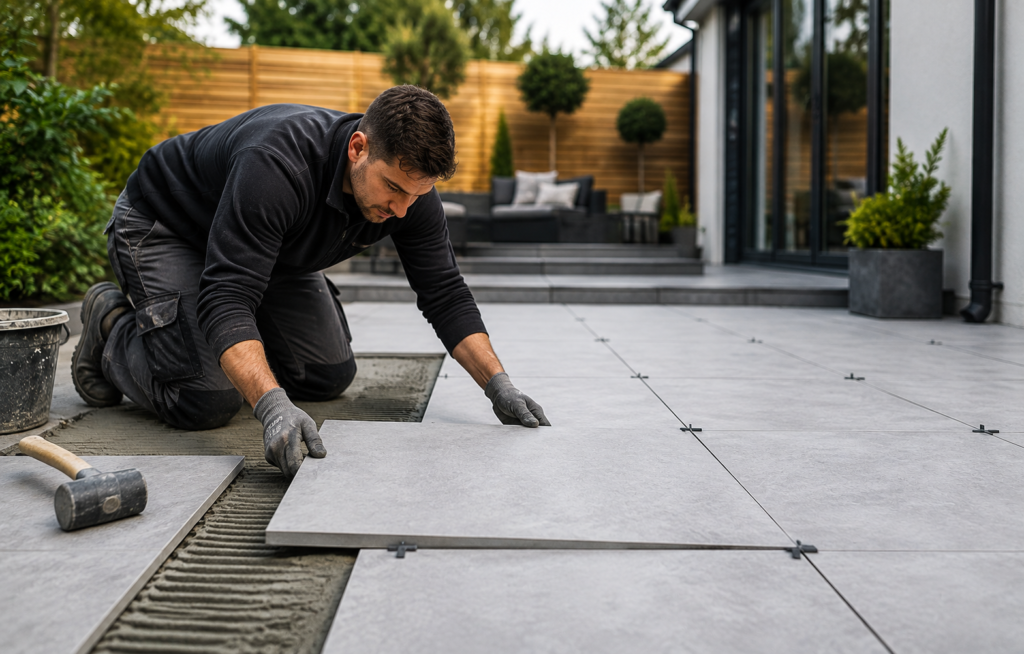
Porcelain must be installed correctly. It should be laid on a suitable base with the right bedding system and a proper bonding method. Outdoor porcelain generally needs a full mortar bed and a slurry primer to help it bond properly. Poor installation can lead to loose slabs, movement, or drainage problems.
Natural stone also needs proper installation. Because some stone slabs vary in thickness, the installer must take extra care to create a level and stable finish. Drainage, falls, jointing, and base preparation are all important.
For Dublin gardens, ground conditions can vary. Some gardens have poor drainage, old patios underneath, soft ground, or limited access. Before choosing any material, it is important to assess the site properly.
A good installer should not only talk about the slabs. They should also explain the base, drainage, levels, and long-term performance.
Which Is Better for Porcelain Patios?
If the goal is to create low-maintenance porcelain patios, porcelain is the clear choice. It is designed to be practical, attractive, and easy to clean.
Porcelain patios are especially good for:
- Homeowners who want a modern garden finish
- Busy families who want less maintenance
- Outdoor dining and seating areas
- Small Dublin gardens where a clean finish matters
- Commercial outdoor spaces
- Gardens with shaded or damp areas
- People who want a consistent colour and design
Natural stone can still be a great choice if you want a more traditional or rustic look. But for many modern Dublin homes, porcelain is often the more practical material.
Which Material Offers Better Value?
Value is not just about the upfront price. It is about how well the patio performs over time.
Porcelain may cost more than some basic natural stone options at the start. However, because it needs less sealing, less intensive cleaning, and usually holds its appearance better, it can offer better long-term value.
Natural stone can be good value if you choose the right type and are happy to maintain it. But if you want a surface that stays cleaner with less work, porcelain is usually the safer investment.
For Dublin homeowners, the main value of porcelain is peace of mind. You get a durable, attractive surface that handles Irish weather well and does not demand constant attention.
When Natural Stone Might Be the Better Choice
Natural stone is not the wrong choice. It simply suits a different type of garden and homeowner.
Natural stone may be better if you want:
- A traditional garden style
- A rustic or aged appearance
- Natural colour variation
- A surface that changes character over time
- A material that suits older properties
- A more organic finish
Some people prefer the imperfections of natural stone. The colour changes, texture, and variation are part of its charm. If that is the look you want, natural stone can be a beautiful option.
When Porcelain Is the Better Choice
Porcelain paving is often better if you want:
- A clean and modern finish
- Low maintenance
- Strong stain resistance
- Good performance in wet weather
- Consistent colour and sizing
- A patio that is easier to clean
- A surface suitable for modern outdoor living
For many Dublin gardens, porcelain is a strong fit because it handles the local climate well. It is practical for everyday use and still gives a premium finish.
Final Thoughts
Both porcelain and natural stone can create a beautiful patio. The right choice depends on your budget, garden style, maintenance expectations, and long-term plans.
Natural stone offers character, variation, and a traditional finish. It can work very well in the right garden, especially if you like a natural look and do not mind ongoing maintenance.
Porcelain paving offers a more modern, low-maintenance, and weather-resistant solution. For many Dublin homeowners, it is the more practical choice because it is easier to clean, less porous, and better suited to regular rain, damp conditions, and busy outdoor spaces.
If you want a patio that looks sharp, performs well, and needs less care over time, porcelain is hard to beat. If you prefer a more rustic and natural finish, stone may still be worth considering.
For most modern porcelain patios in Dublin, porcelain paving gives the best balance of cost, performance, appearance, and long-term value.
Frequently Asked Questions?
Is porcelain paving better than natural stone for Dublin gardens?
Porcelain paving is often the better choice for Dublin gardens if you want a low-maintenance, durable, and easy-to-clean patio. It handles rain, frost, and damp conditions well, which makes it practical for Irish weather. Natural stone can still be a good option if you prefer a more rustic and traditional look.
Is porcelain paving more expensive than natural stone?
Porcelain paving can cost more than some basic natural stone options, but it often offers better long-term value. It usually needs less maintenance, less sealing, and less cleaning over time. Natural stone prices vary depending on the type of stone, quality, and installation requirements.
Does porcelain paving need much maintenance?
No, porcelain paving is generally low maintenance. Most porcelain patios can be cleaned with warm water, a mild cleaner, and a brush. Because porcelain is less porous than many natural stones, stains, dirt, and moisture are less likely to soak into the surface.
Is natural stone suitable for Irish weather?
Yes, natural stone can be suitable for Irish weather, but the type of stone matters. Some natural stones absorb more water and may need sealing to protect against stains, algae, and frost damage. Proper installation and regular maintenance are important if you choose natural stone for a Dublin garden.
Which is better for porcelain patios, porcelain or natural stone?
For porcelain patios, porcelain is the better option because it is designed to give a clean, modern finish with strong weather resistance and low upkeep. It is ideal for Dublin homeowners who want a patio that looks neat, performs well, and is easier to maintain throughout the year.