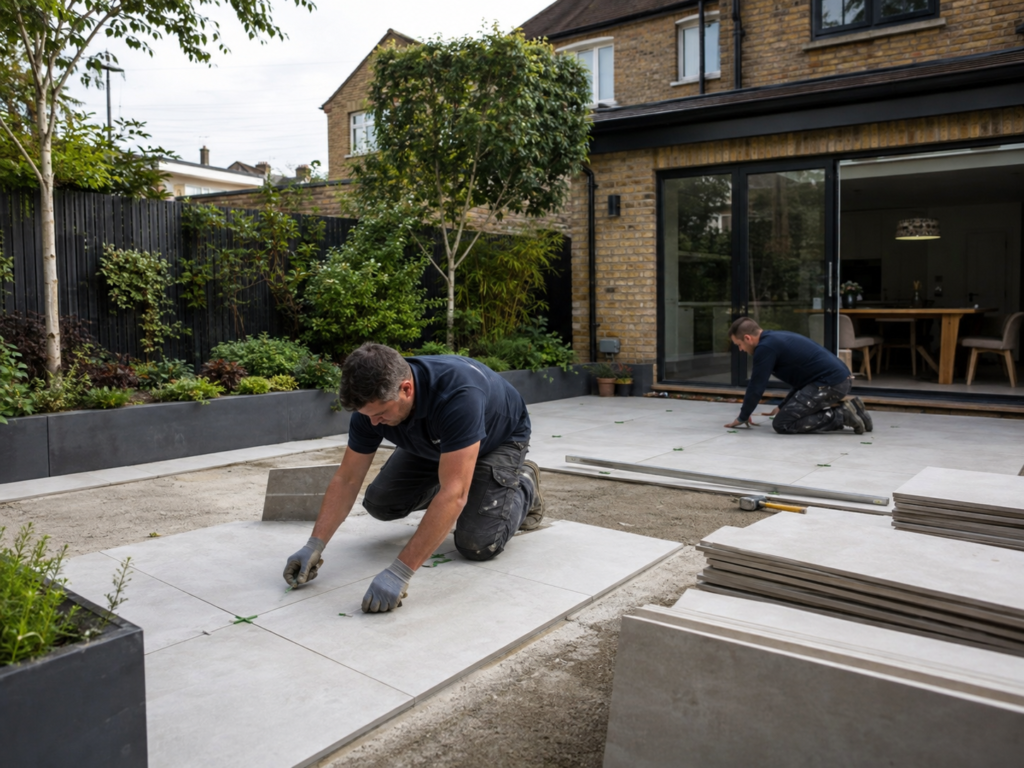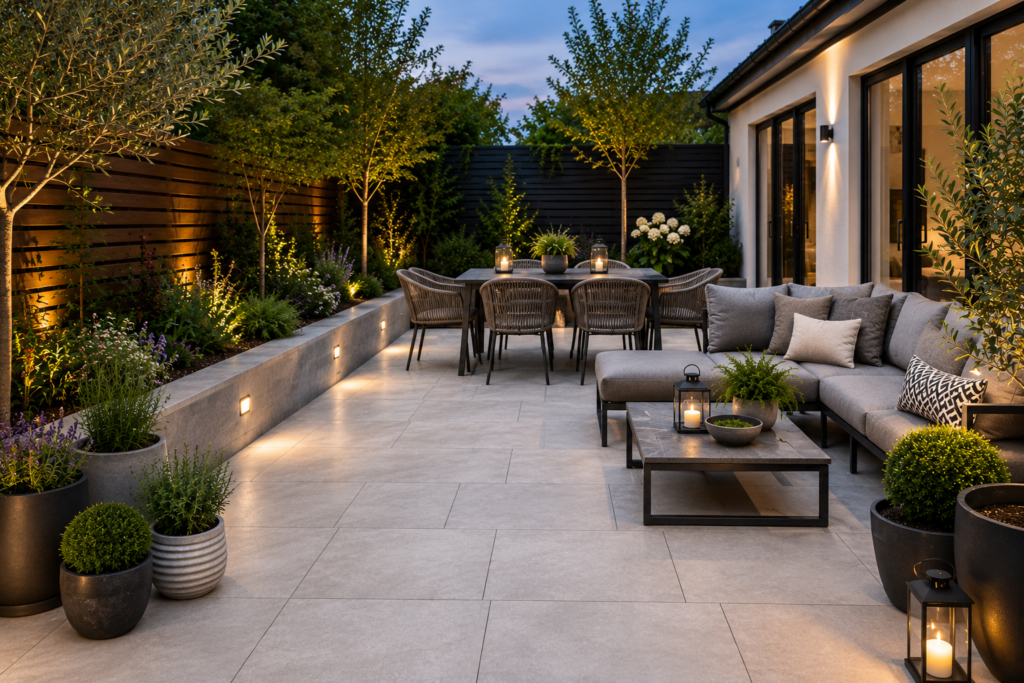
As Irish homeowners plan their gardens for 2026, patio design is at the forefront of outdoor living. A patio is not just a slab of stone; it’s the hub of family life, dining and relaxation. Trends this year show a shift towards durable, low‑maintenance surfaces that can stand up to our damp, unpredictable climate. While natural stone remains a premium choice, high‑quality porcelain has emerged as a strong alternative for those seeking a contemporary, easy‑care surface.
Large‑format slabs (900×600 mm and 1200×600 mm) are also gaining popularity because they create a clean, expansive feel. This article explores why porcelain paving is the perfect material for patios in Dublin and across Ireland in 2026, combining style, practicality and sustainability.
Ireland’s famously unpredictable weather means patios must endure everything from persistent drizzle to the occasional heatwave. In the past, homeowners relied on natural stone or timber decking, but these materials require regular sealing or oiling and can become slippery when wet.
Today, porcelain paving is reshaping expectations: it provides the sleek look of stone or hardwood without the upkeep. The drive toward outdoor living in 2026 also means patios are no longer isolated spaces; they integrate outdoor kitchens, pergolas and fire features, so the paving material must be able to handle cooking spills, heavy furniture and constant foot traffic. Porcelain excels at all of these tasks.
Why choose porcelain paving for Irish patios?
Porcelain tiles have become the go‑to material for modern patio design because of their durability and slip resistance. Unlike conventional ceramic, porcelain is made from refined clays fired at very high temperatures. This process produces a dense body with a water‑absorption rate of less than 0.5 %, which means porcelain does not absorb moisture and will not crack in the freeze–thaw cycles that Irish winters bring. The non‑porous surface resists stains, moss and algae growth, so porcelain patios remain looking fresh with minimal upkeep.
Another reason homeowners choose porcelain is its slip resistance. Tiles are graded by an R‑rating; R11–R13 pavers provide excellent grip even when wet. This makes porcelain safer underfoot than polished stone or timber decking, especially in Ireland’s damp climate. Porcelain surfaces also resist fading because their colours are baked into the glaze at high temperatures. As a result, your patio will retain its appearance for decades without the need for sealing or staining.
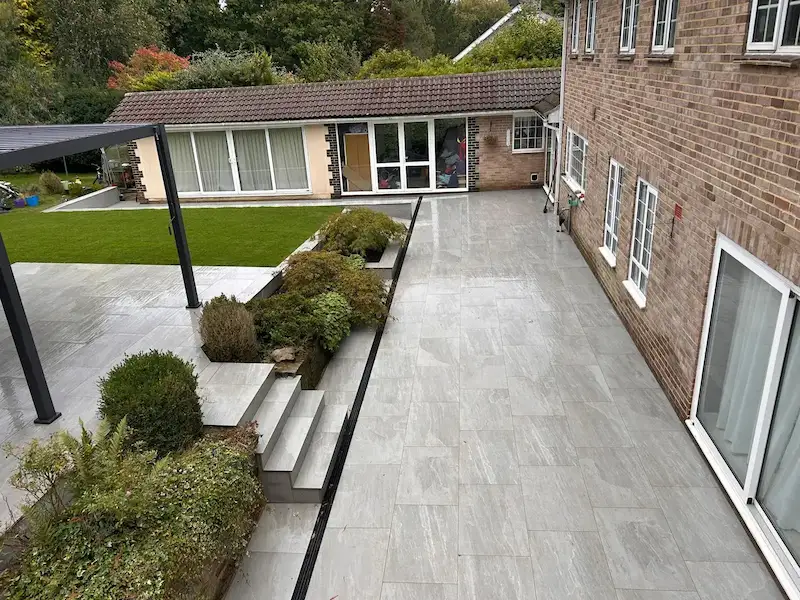
In addition to their dense body, porcelain pavers carry a PEI (Porcelain Enamel Institute) rating that indicates how much wear they can handle. For patios, choose tiles rated in groups 4 or 5, which are designed for heavy foot traffic and outdoor use. Porcelain’s wear rating ensures it will not scratch or scuff easily, even under chair legs or barbecue grills. Unlike timber decking, porcelain never needs to be sanded, oiled or painted. Unlike resin surfaces, it doesn’t discolour in UV light and can be power‑washed without damage. These combined properties mean that your patio remains functional and beautiful for decades with only basic care.
Weather Resistance & Safety in the Irish Climate
Ireland’s weather poses unique challenges for outdoor surfaces. Rainfall is common throughout the year, and cold snaps can cause lesser materials to crack or become slippery. Porcelain’s very low water‑absorption rate (<0.5 %) prevents moisture from penetrating the tile. Because the tiles do not absorb water, they are impervious to frost damage and maintain their structural integrity during freeze–thaw cycles.
Slip resistance is another critical factor. In addition to the R‑rating, porcelain pavers often feature textured surfaces or grip finishes to provide extra traction. This makes them safe for patios, pool surrounds and pathways where wet conditions are common. The R11–R13 range recommended for outdoor use ensures that even in heavy rain, surfaces remain secure underfoot. For families with children or older adults, this peace of mind is invaluable.
Maintenance in a wet climate is also simpler with porcelain. Because the surface is non‑porous, dirt and algae stay on top and can be swept or washed away easily. Occasional pressure washing with low pressure is all that is required to remove stubborn dirt. These tiles do not require sealants, reducing both long‑term costs and the need for chemical treatments.
Aesthetic Versatility & Trends for 2026
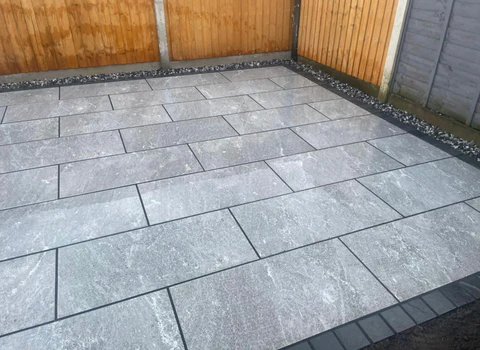
Porcelain paving is a strong choice for Dublin gardens because it gives homeowners a clean, modern finish that suits both new builds and older homes being updated. Thanks to improved inkjet printing and textured surface technology, porcelain can now recreate the look of natural stone, timber, concrete, or slate very convincingly.
In many Dublin patios, larger slab sizes such as 900×600 mm and 1200×600 mm are becoming more common because they create a neater layout and help smaller outdoor spaces feel more open.
It also works especially well in Dublin where many homeowners want the patio to feel like a natural extension of the house. Grey tones remain a popular option, but softer beige and cream shades are also a good fit for Irish gardens where people want a brighter, warmer finish without too much upkeep.
With different slab sizes, colours, and laying patterns available, porcelain gives more freedom to create a patio that feels tailored to the property.
- Large-format slabs suit modern Dublin patio designs
- Fewer joints help compact gardens feel cleaner and more spacious
- Finishes can recreate limestone, slate, timber, or concrete looks
- Popular local choices include grey, anthracite, beige, and cream tones
- Running bond, stack bond, and herringbone patterns can add character
- Bullnose edging helps steps and raised areas look more finished
- Plank-style porcelain can give a decking look without the maintenance of timber
Sustainability & Eco-Friendly Benefits
Porcelain paving is a practical choice for homeowners who want a lower-maintenance patio with long-term value. Many porcelain products are made using more efficient production methods, including recycled materials and water reuse during manufacturing.
Because porcelain lasts for years and does not need frequent replacement, it can also help reduce waste over time.
It also suits Irish gardens well from a maintenance point of view. Porcelain resists stains, algae, and moss better than many porous materials, which means fewer cleaning products are needed.
When installed with permeable joints or pedestal systems, it can also support better drainage, which is especially useful in Dublin and across Ireland where wet weather is a regular concern.
Installation & Cost Considerations
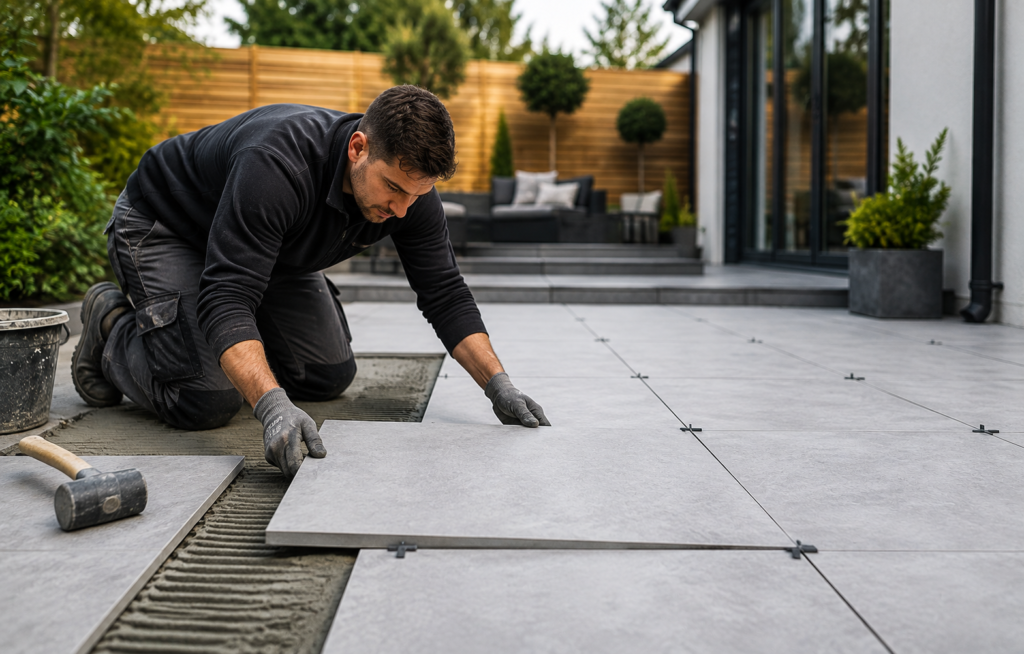
Porcelain paving performs best when it is installed properly. For most patios and garden paths, 20 mm slabs are suitable, while thicker options are better for areas that need to handle heavier loads. A solid base, proper drainage, and correct joint spacing all matter if you want the patio to stay level and last well in Irish conditions.
Porcelain can cost more upfront than some other paving options, but it often works out better long term because it is durable, fade resistant, and low maintenance. Since a patio is a visible part of the garden and home, good installation is just as important as the material itself.
Conclusion
With Irish homeowners seeking durable, low‑maintenance and visually striking patios, porcelain paving emerges as the perfect solution for 2026. Its non‑porous surface resists staining and moisture, while its extreme durability and slip resistance make it ideal for Ireland’s wet climate.
Large‑format porcelain slabs provide a contemporary, seamless look, and advanced printing techniques deliver endless aesthetic possibilities. Sustainable manufacturing practices and long life cycles further enhance porcelain’s appeal.
When installed correctly on a proper base, porcelain pavers will serve as the centrepiece of your garden for decades, combining beauty with practicality and adding real value to your home.
Frequently Asked Questions?
Are porcelain tiles slippery when wet?
Outdoor porcelain pavers are rated for slip resistance; those with an R11–R13 rating provide good traction even in wet conditions.
How do I clean a porcelain patio?
Sweep regularly to remove debris and wash with warm water and a mild detergent. For deeper cleaning, a low‑pressure wash will remove stubborn dirt without damaging the surface.
Do porcelain tiles crack in cold weather?
Porcelain tiles have a water‑absorption rate below 0.5 %, so they resist freeze–thaw damage and will not crack in Irish winters.
What thickness of porcelain should I choose?
For patios and paths, 20 mm tiles are sufficient. Areas that may bear vehicle loads require thicker 30 mm pavers.
Are porcelain tiles environmentally friendly?
Many porcelain manufacturers reuse water and materials, reducing waste. The long lifespan of porcelain also means fewer replacements over time, conserving resources.