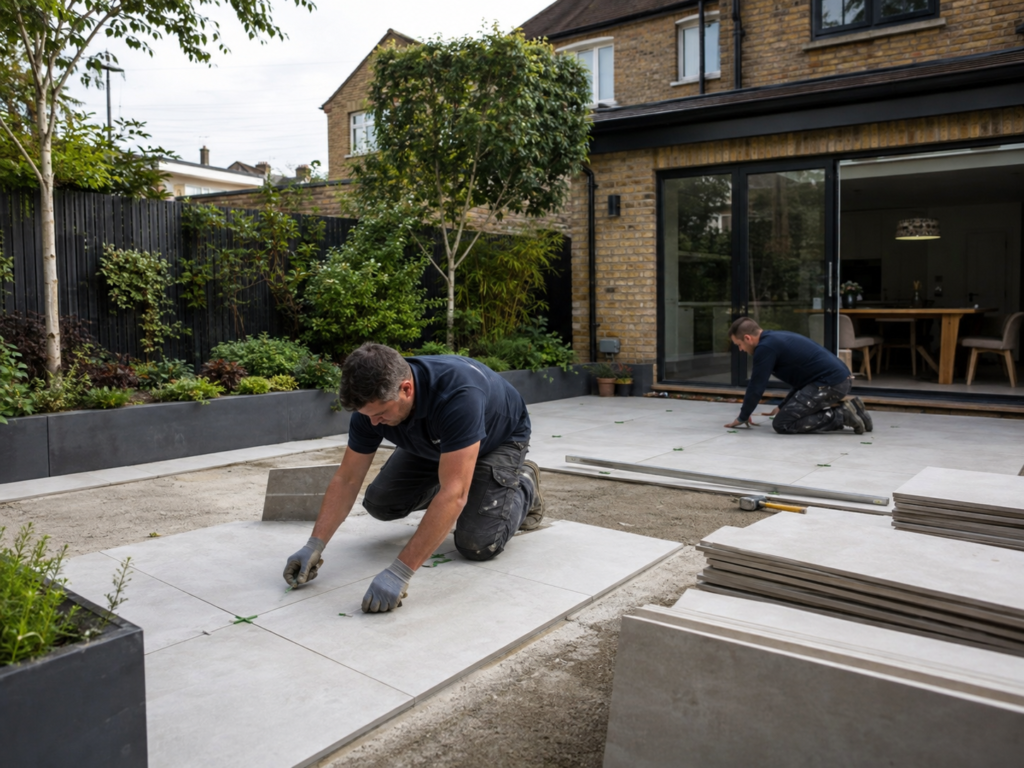
If you are planning a new patio, the slabs you choose matter, but the installer matters just as much. In fact, one of the clearest lessons from current patio design in Dublin is that the quality of the laying work is what really determines the finished result.
Even premium paving can disappoint if the base, drainage, bonding, and jointing are handled poorly. That is why choosing the right porcelain paving contractor in Dublin is one of the most important decisions in the whole project.
Porcelain paving continues to be a strong choice for Irish patios because it suits modern garden design, offers low maintenance, and performs well in damp conditions. Irish patio trend coverage for 2026 points to porcelain as a top material thanks to its durability, slip resistance, low water absorption, and broad style range.
At the same time, larger slab formats are becoming more popular because they create a cleaner, more open look in outdoor spaces.
That growing demand also means more homeowners are now comparing porcelain paving installers in Dublin. Some contractors truly understand the technical side of porcelain. Others treat it like ordinary patio slab work, and that is where problems start.
So how do we separate a solid porcelain paving contractor in Dublin from someone who simply says they install patios?
Start with porcelain-specific experience
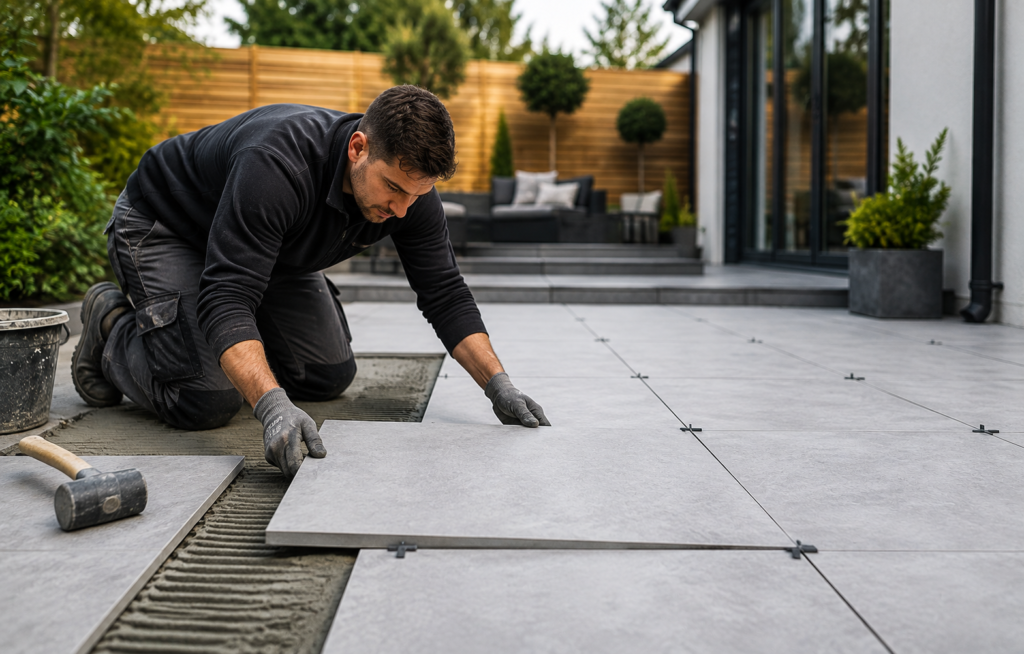
The first thing to check is whether the contractor has real experience with porcelain paving, not just general landscaping or patio work. Porcelain is not installed the same way as every other paving product. Manufacturer guidance for external porcelain repeatedly highlights the need for priming the back of the tile, laying onto a full wet mortar bed, and preparing a compacted sub-base with correct falls for drainage. That means the installer should be able to explain their process clearly and confidently, not vaguely.
A good porcelain paving contractor should be able to explain the job clearly before any work starts. That gives you confidence they understand the process and are not simply treating porcelain like any other patio slab.
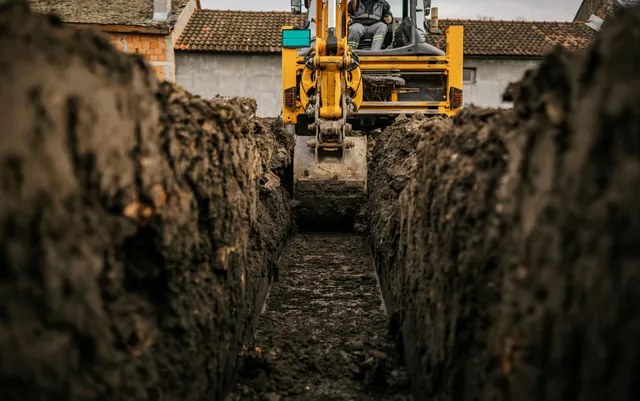
- Excavation depth and site preparation
- Sub-base build-up and compaction
- Drainage direction and patio falls
- Bedding method for the slabs
- Cutting approach and finishing detail
- Grout or jointing method
- How slabs are handled to avoid edge chipping
Porcelain paving looks clean and simple when finished, but the installation behind it is detail-sensitive. If a contractor cannot talk through these basics with confidence, that is usually a sign to be cautious.
Ask the right technical questions
A reliable porcelain paving contractor in Dublin should have no problem answering direct technical questions. In many cases, the easiest way to judge an installer is by how specific their answers are.
Here are the questions that matter most:
How do you prepare the base?
Porcelain paving guidance commonly calls for a compacted Type 1 sub-base, often in the region of 50 to 100 mm depending on the system and the site. The important point is not just depth, but proper compaction and stability.
How do you deal with drainage?
A competent installer should mention creating a fall so water runs away properly. One guide for porcelain paving states that a fall of 1:60 is usually adequate. Another stresses that the base and screed must support the formation of falls so water can run off.
Do you slurry-prime the back of every slab?
This is one of the biggest checks. Multiple installation guides say the back of porcelain tiles should be primed with slurry primer before bedding to achieve bond strength and reduce failure risk.
Do you use a full bed of mortar?
They should say yes. Guidance for porcelain paving is clear that slabs should be laid on a full wet bed of mortar, not spot-bedded or dot-and-dabbed. Dot-and-dab methods are specifically warned against in jointing guidance because they increase the risk of failure.
How do you handle joints?
The contractor should tell you that porcelain is not designed to be butt jointed. Exact joint widths can vary by product system, but the slabs should not simply be pushed tightly together. Manufacturers also stress using the correct jointing product for porcelain and cleaning off residue quickly.
How do you cut porcelain?
Porcelain should be cut with the right tools, usually a suitable diamond blade and preferably a water-fed saw for cleaner, more accurate cuts. A contractor who treats cutting as an afterthought is more likely to chip edges and spoil the finish.
These questions do not make you difficult. They make you informed. And informed clients usually get better jobs.
Compare written quotes, not vague promises
Once you narrow down your shortlist, ask for comparable written quotes from multiple contractors. Hiring guidance recommends getting more than one written quote so you can compare scope, clarity, and value rather than relying only on price. One guide suggests three to five comparable written quotes and also recommends asking for references or seeing similar completed work. Another stresses that getting multiple itemised quotes helps you understand what is fair in your area and what is actually included.
This matters because two patio quotes can look similar at first glance while covering very different work. One contractor may price excavation, waste removal, sub-base, slurry primer, full mortar bed, cuts, drainage corrections, and final clean-down. Another may leave out several of those items and appear cheaper until the extras start piling up.
A strong quote from porcelain paving installers in Dublin should make clear:
- what groundworks are included
- what base build-up is included
- whether drainage adjustments are included
- what porcelain product or size is being installed
- what bonding and jointing materials are being used
- whether cutting, edging, steps, and waste removal are included
- estimated timescale and payment structure
Clarity is often a sign of professionalism. If the quote feels vague, the job may feel vague too.
Check insurance, references, and guarantees
A contractor working on your property should be able to show proof of insurance. Written contract guidance for homeowners says public liability insurance is one of the key things to check, along with guarantees and warranties on work and materials. That information should be stated clearly in writing.
References matter too. One paving trade association overview notes that vetted paving contractors are assessed not just on work quality, but also on insurance, business practices, and follow-up on references. That is a useful benchmark for what homeowners should expect when checking a contractor independently.
So before hiring, ask:
- Are you insured?
- Can I see recent porcelain jobs you completed?
- Can I speak to past clients?
- What guarantee do you provide on workmanship?
- What warranties apply to the materials?
A dependable porcelain paving contractor in Dublin will not be offended by these questions. They will expect them.
Look beyond price alone
It is natural to compare cost, especially when porcelain paving is not the cheapest patio option upfront. But the cheapest quote is rarely the most useful quote. Porcelain is a performance material. It offers strong durability, stain resistance, and colour stability, but only when it is installed correctly.
If the base is poor or the bond fails, you are not buying a bargain. You are buying a future repair job.
Current outdoor living coverage also points out that high-performance materials such as porcelain are popular because they are durable and low maintenance, which is exactly why installation quality matters so much.
If you want that long-term payoff, you need the contractor who will build the system properly from the ground up.
It is usually better to pay a bit more for a contractor who explains the process well, shows real porcelain work, uses the correct materials, and provides a proper written scope than to save money with someone who avoids detail.
Patios are exposed to weather year-round. Mistakes do not stay hidden for long.
Pay attention to how they communicate
Good communication early on usually says a lot about how the job will be managed. If a contractor is vague, slow to reply, or unclear at quote stage, that can carry through into the work itself.
Better porcelain paving installers in Dublin usually cover the details properly, such as:
- how you want to use the patio
- where the drainage fall will go
- slab sizes and layout
- edging, steps, and finishing details
- what happens if ground conditions change
That matters because patios now need to do more than fill space. In many Dublin gardens, they are designed as an extension of the home, linking with seating areas, pergolas, fire features, and outdoor dining spaces.
Choose someone who understands the finish you want
Porcelain paving is available in many styles, from clean modern greys to stone-look finishes and larger formats that create a more seamless surface. Dublin garden trend coverage notes that high-quality porcelain in larger sizes is especially attractive for homeowners who want a contemporary look with minimal maintenance.
So the right contractor is not only someone who can install the slabs properly. It is someone who can help guide layout, slab orientation, joint finish, edging details, and transitions to lawns, walls, paths, or thresholds.
A well-installed patio is technical, but it is also visual. The best results come when both are handled well.
Final thoughts
If you are comparing porcelain paving contractors in Dublin, do not judge them on photos and price alone. Look at their process.
The right contractor should understand porcelain properly, explain the base and drainage clearly, use the correct bonding method, provide a written quote, show insurance, and communicate professionally throughout. Porcelain only performs well outdoors when it is installed the right way, which is why choosing the installer matters as much as choosing the slabs.
Choose well from the start, and your porcelain patio is far more likely to stay level, clean, and attractive for years.
Frequently Asked Questions?
How many quotes should I get before hiring a porcelain paving contractor in Dublin?
A good rule is to get multiple comparable written quotes. Hiring guidance recommends asking for several written quotes so you can compare scope, clarity, and value, not just headline price.
What is the biggest sign that a porcelain paving installer knows what they are doing?
They can clearly explain the technical process, including sub-base preparation, drainage fall, slurry priming, full wet mortar bedding, and proper jointing. Those steps are repeatedly highlighted in manufacturer guidance for external porcelain.
Should porcelain paving be laid with no gap between slabs?
No. Porcelain is not designed to be butt-jointed. The installer should use the correct jointing approach for the product system and avoid pushing slabs tightly together.
What insurance should a paving contractor have?
At minimum, you should ask for proof of public liability insurance. Written contract guidance also says guarantees and warranties should be clearly set out in writing.
Is porcelain paving a good choice for Dublin gardens?
Yes. Current patio trend coverage for Ireland highlights porcelain as a top choice because it is durable, slip resistant, low maintenance, and well suited to damp conditions. Larger porcelain formats are also popular for modern outdoor spaces.