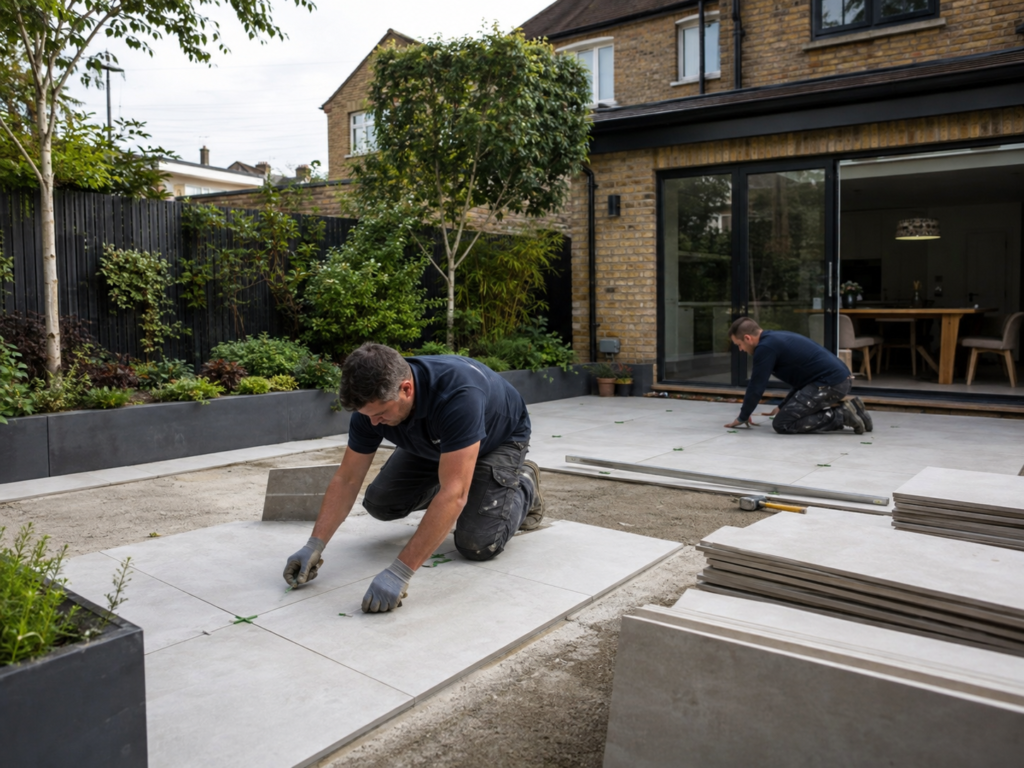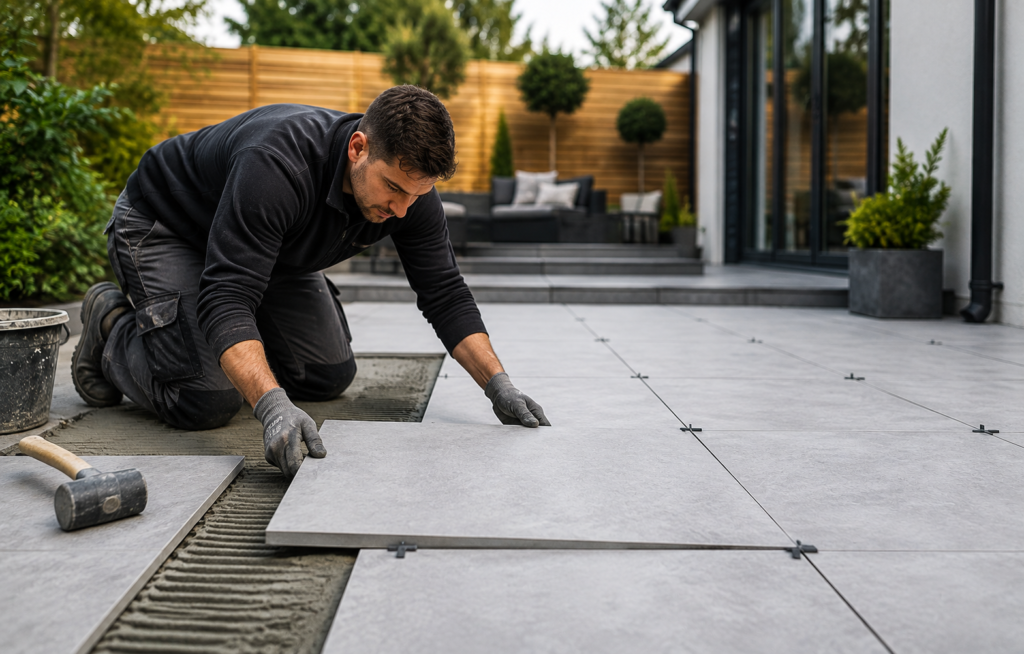
Porcelain patios are a popular choice for Irish homes because they look clean, modern, and are easy to maintain. Compared with many natural stone or concrete surfaces, porcelain paving is strong, low-porous, and less likely to stain when it is installed properly.
However, low maintenance does not mean no maintenance. Ireland’s wet weather, fallen leaves, moss, dirt, and outdoor use can still affect how your patio looks over time. The good news is that most porcelain patios are easy to clean, and many small problems can be fixed before they become bigger issues.
In this guide, we explain how to look after porcelain paving in Ireland, how to clean it properly, what repairs may be needed, and when to search for professional porcelain repairs near me.
Why Porcelain Patios Are Easy to Maintain
Porcelain is made at very high temperatures, which makes it dense and hard-wearing. This means it does not absorb water in the same way as many other paving materials.
For Irish gardens, this is a big advantage. Rain, damp conditions, and regular outdoor use are normal here, so homeowners want a patio that can handle the weather without constant cleaning or sealing.
A well-installed porcelain patio can offer:
- A clean and modern finish
- Good stain resistance
- Low water absorption
- Strong resistance to frost
- Easy cleaning with water and mild detergent
- Long-lasting colour that does not fade easily
This is why porcelain paving Ireland searches have become more common among homeowners who want a smart patio without heavy upkeep.
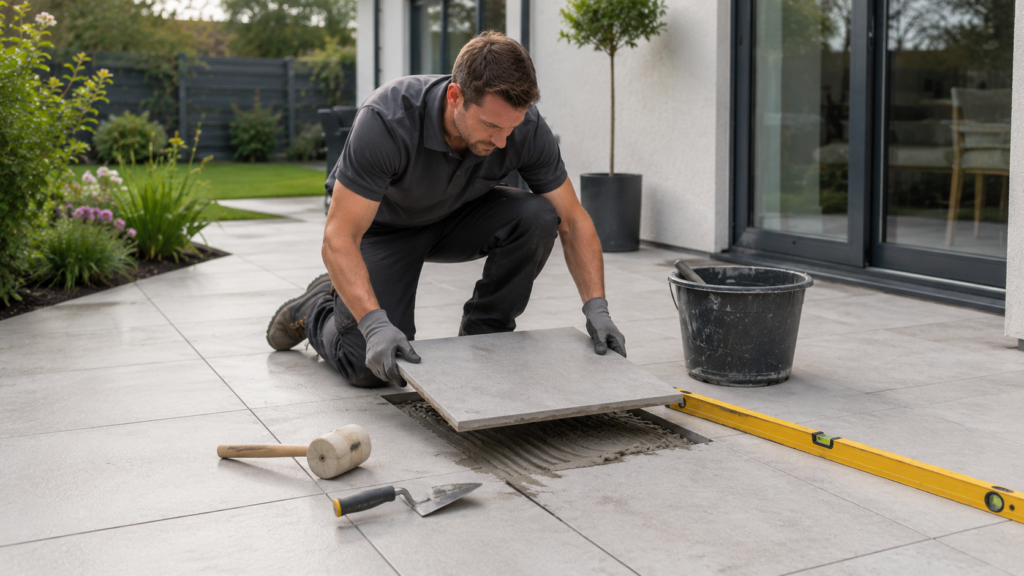
How Often Should You Clean a Porcelain Patio?
For most homes in Ireland, a porcelain patio should be given a light clean every few weeks and a deeper clean a few times per year.
The exact timing depends on your garden. A patio under trees may need more cleaning because of leaves, sap, and bird droppings. A sunny, open patio may stay cleaner for longer.
Here is a simple maintenance guide:
Maintenance Task | How Often |
Sweep leaves and dirt | Weekly or when needed |
Rinse with water | Every few weeks |
Wash with mild detergent | Every 1 to 2 months |
Deep clean | 2 to 3 times per year |
Check grout and joints | Twice per year |
Check for movement or loose slabs | After winter and heavy use |
This routine is enough for most porcelain patios. The main goal is to stop dirt, algae, and debris from building up for too long.
How to Clean Porcelain Paving
Cleaning porcelain paving is usually simple. You do not need strong chemicals or expensive treatments for normal dirt.
Start by brushing the patio with a soft outdoor brush. Remove leaves, soil, dust, and loose debris. Then rinse the surface with clean water.
For general cleaning, mix warm water with a mild outdoor cleaner or gentle detergent. Apply it to the surface, scrub lightly with a soft brush, and rinse well.
Avoid leaving dirty water sitting on the surface. Push the water towards the drain or garden edge so the patio dries evenly.
For regular cleaning, you should avoid:
- Harsh acidic cleaners
- Bleach used too often
- Wire brushes
- Abrasive pads
- Strong chemical mixes
- Cleaning products not suitable for porcelain
Porcelain is strong, but the wrong cleaning products can damage grout, affect nearby plants, or leave marks on the surface.
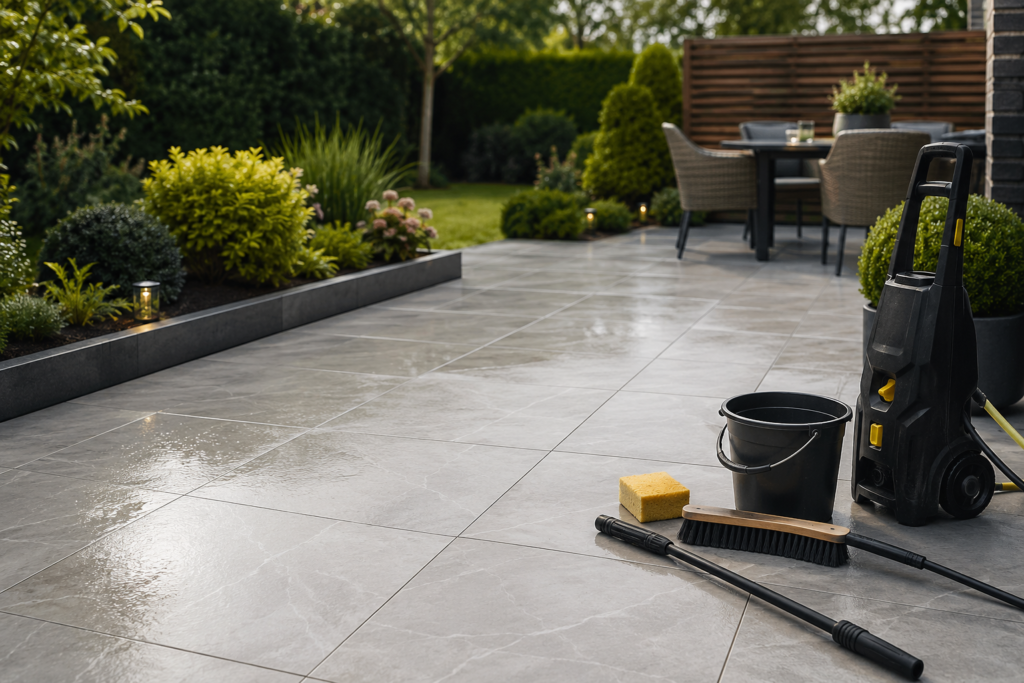
Can You Pressure Wash Porcelain Patios?
Yes, porcelain patios can usually be pressure washed, but it should be done carefully.
A pressure washer can help remove dirt, algae, and grime, especially after winter. However, using too much pressure too close to the surface can damage grout lines or jointing material.
Keep the pressure washer nozzle at a safe distance and use a fan setting rather than a very direct jet. Do not hold the nozzle too close to the joints.
Pressure washing is useful for deep cleaning, but it should not be your only maintenance method. Regular sweeping and light washing will keep the patio cleaner between deeper cleans.
How to Remove Algae and Green Marks
In Ireland, green marks and algae are common on outdoor surfaces because of damp weather. Even though porcelain itself does not absorb much water, algae can still sit on top of the surface, especially in shaded areas.
To remove green marks, start with warm water and a mild patio cleaner. Let it sit for a short time, then scrub gently and rinse well.
If the algae keeps coming back, the issue may be shade, poor drainage, or water sitting on the patio. In that case, cleaning alone may not solve the problem fully.
To reduce algae build-up:
- Sweep leaves away regularly
- Keep drains clear
- Trim back plants that block sunlight
- Avoid letting soil wash onto the patio
- Clean shaded areas more often
A good porcelain patio should be laid with the right fall so water drains away. If water is sitting in one area, it may need to be checked by a professional.
Common Porcelain Patio Problems
Porcelain paving is durable, but problems can still happen if the installation was not done correctly or if the patio has been neglected.
The most common issues include:
Problem | Possible Cause |
Loose slabs | Poor bedding, weak base, or failed adhesive |
Cracked tiles | Movement underneath, heavy impact, or poor installation |
Stained grout | Dirt, algae, or wrong cleaning products |
Water pooling | Incorrect fall or drainage issue |
White marks or residue | Grout haze, cement residue, or mineral deposits |
Chipped edges | Impact damage or poor cutting during installation |
Most of these problems are not caused by the porcelain itself. They are usually linked to the base, drainage, jointing, or installation method.
Can Porcelain Patio Slabs Be Repaired?
Yes, many porcelain patio problems can be repaired. The repair depends on what has gone wrong.
A loose slab may need to be lifted, the base checked, and the tile re-bedded correctly. A cracked or badly chipped slab may need to be replaced. Grout issues can often be cleaned, repaired, or re-jointed.
The important thing is to fix the cause, not just the visible problem. For example, replacing one loose slab will not solve the issue if the base underneath is weak or moving.
If you are searching for porcelain repairs near me, look for a contractor who understands porcelain paving, not just general paving. Porcelain needs the right adhesive, cutting tools, base preparation, and jointing method.
When Should a Porcelain Slab Be Replaced?
A porcelain slab may need replacing if it is badly cracked, deeply chipped, rocking underfoot, or no longer sitting level with the rest of the patio.
Small chips may sometimes be improved, but they are not always invisible after repair. Because porcelain is a finished product, deep damage is usually best solved by replacing the affected slab.
This is why it is always a good idea to keep a few spare slabs after installation. If one slab needs to be changed in the future, having matching tiles makes the repair much easier.
If no spare slabs are available, a contractor may still be able to source a close match, but it can be harder if the original product has been discontinued.
What Causes Porcelain Patio Slabs to Come Loose?
Loose porcelain slabs are often caused by poor installation. Porcelain is very dense, so it needs the correct bedding method and bonding slurry to help it stick properly.
If porcelain is laid like standard concrete paving, it may not bond well. Over time, slabs can become hollow, loose, or uneven.
Common reasons for loose porcelain slabs include:
- No proper bonding slurry used
- Weak mortar bed
- Poor base preparation
- Water movement under the patio
- Incorrect drainage
- Movement in the ground
- Heavy use before the patio has cured
This is why porcelain paving should always be installed by someone who knows the correct process. A good installation is the best form of maintenance.
How to Keep Grout and Joints Clean
The joints between porcelain slabs are important. They help finish the patio neatly and reduce weed growth. However, grout and jointing can still collect dirt over time.
To keep joints clean, brush the patio regularly and wash away dirt before it settles. Avoid aggressive pressure washing directly into the joints, as this can weaken or remove jointing material.
If joints become cracked, loose, or washed out, they should be repaired. Open joints can allow water to get below the paving, which may cause bigger problems later.
If weeds appear in the joints, remove them carefully. Do not ignore them, as roots can widen gaps and make the patio look poorly maintained.
How to Avoid Stains on Porcelain Patios
Porcelain is stain resistant, but stains can still happen if spills are left for too long. Outdoor dining, barbecues, plant pots, rusting furniture, and muddy shoes can all leave marks.
Clean spills as soon as possible, especially:
- Oil and grease
- Wine and coffee
- Barbecue sauces
- Rust from metal furniture
- Compost and soil
- Leaf stains
- Bird droppings
For plant pots, use pot feet or stands to keep them slightly raised. This helps air flow underneath and reduces rings or trapped moisture marks.
For garden furniture, check metal legs for rust. Rust marks can be difficult to remove if they sit on the surface for too long.
Winter Care for Porcelain Patios in Ireland
Irish winters can bring frost, rain, and slippery outdoor conditions. Porcelain paving is normally suitable for this weather, especially when outdoor-grade slip-resistant tiles are used.
During winter, keep the patio clear of leaves and dirt. Wet leaves can make any surface slippery. If frost is expected, avoid letting water sit on the patio.
You can use suitable de-icing products if needed, but avoid harsh products that may damage grout, nearby grass, or planting areas. After winter, give the patio a full clean and check for any loose slabs or damaged joints.
Spring is a good time to inspect your porcelain patio and arrange repairs if anything has moved over the colder months.
DIY Repairs vs Professional Repairs
Some basic maintenance can be done by the homeowner. Sweeping, washing, removing light algae, and cleaning small marks are usually simple jobs.
However, structural problems should be handled by a professional. If slabs are loose, cracked, uneven, or holding water, the issue may be underneath the surface.
DIY repairs may seem cheaper at first, but poor repair work can make the problem worse. Porcelain needs the right materials and method, especially when lifting and relaying slabs.
You should call a professional if:
- Slabs are moving or rocking
- Water is pooling in one area
- Several slabs sound hollow
- Joints are cracking or failing
- Tiles are cracked or badly chipped
- The patio has drainage problems
- Previous repairs have failed
A professional will check whether the issue is with the slab, the jointing, the bedding layer, or the base.
How Much Maintenance Do Porcelain Patios Need?
Porcelain patios need less maintenance than many other patio materials, but they still need regular care. The main tasks are cleaning, checking joints, and dealing with small issues early.
For most Irish homes, the maintenance is simple:
- Keep the surface clear
- Wash when needed
- Deep clean after winter
- Check joints twice per year
- Repair loose or damaged areas quickly
If your patio is cleaned regularly and installed correctly, it should stay looking smart for many years.
Choosing the Right Contractor for Porcelain Repairs
When looking for porcelain repairs near me, do not choose only based on price. Porcelain repair work needs skill, especially if slabs need lifting and relaying.
A good contractor should be able to explain what caused the problem and how they will fix it. They should also understand drainage, base preparation, bonding slurry, jointing, and replacement slabs.
Before hiring someone, ask:
- Have you worked with porcelain paving before?
- Can you repair loose porcelain slabs?
- Will you check the base underneath?
- What jointing material will you use?
- Can you match the existing slabs?
- Is the issue caused by drainage or installation?
- Will the repair blend in with the current patio?
The right repair should not just make the patio look better for a few weeks. It should solve the problem properly.
Final Thoughts
Porcelain patios are a great choice for Irish gardens because they are strong, modern, and easy to keep clean. With regular sweeping, light washing, and seasonal checks, your patio can stay looking fresh for a long time.
Most maintenance is simple, but repairs should not be ignored. Loose slabs, cracked joints, poor drainage, or damaged tiles can lead to bigger issues if they are left too long.
If your patio only needs cleaning, a basic maintenance routine may be enough. But if slabs are moving, cracked, or holding water, it is better to contact a professional who understands porcelain paving in Ireland.
A well-maintained porcelain patio will not only look better, but it will also be safer, more durable, and more enjoyable to use throughout the year.
Frequently Asked Questions?
Are porcelain patios easy to maintain?
Yes. Porcelain patios are one of the easier patio surfaces to maintain. Regular sweeping, occasional washing, and a deeper clean a few times per year are usually enough.
Do porcelain patios need sealing?
Most outdoor porcelain paving does not need sealing because it has very low water absorption. However, grout and jointing areas still need to be kept clean and checked over time.
Can porcelain paving crack?
Porcelain is strong, but it can crack if there is movement underneath, poor installation, heavy impact, or a weak base. Cracked slabs usually need to be replaced.
Why are my porcelain slabs coming loose?
Loose slabs are often caused by poor bonding, weak bedding, drainage problems, or movement in the base. The slab may need to be lifted and relaid correctly.
When should I look for porcelain repairs near me?
You should look for professional help if your patio has loose slabs, cracks, pooling water, damaged joints, or areas that feel uneven underfoot.