A garden can change how a home feels. In many Dublin homes, the outdoor space is no longer just a back garden. It is a place to sit, eat, relax, and spend time with family.
This case study looks at how a typical Dublin garden can be transformed with porcelain pavers. The goal was simple: create a clean, modern, low-maintenance patio that works well in Irish weather and suits everyday family life.
For homeowners looking at porcelain paving Dublin services, this type of project is a good example of what can be achieved with the right planning, preparation, and installation.
The Garden Before the Work Started
Before the upgrade, the garden had an old paved area that looked tired and uneven. Some slabs had moved over time, weeds were growing between the joints, and the surface became slippery after wet weather.
The space was usable, but it did not feel welcoming. The homeowners wanted a patio that looked fresh, stayed easier to clean, and gave them more space for outdoor dining.
The main problems were:
Issue | Why It Was a Problem |
Uneven old paving | The patio did not feel safe or comfortable |
Poor drainage | Water gathered in some areas after rain |
Weeds between slabs | The garden needed regular maintenance |
Dull appearance | The space looked dated |
Limited usable area | There was not enough room for seating and dining |
The homeowners wanted a garden that looked modern but still felt natural. They also wanted a practical finish that would suit a busy home in Dublin.
The Goal of the Project
The aim was to create a clean porcelain patio that could be used for family meals, summer evenings, and daily outdoor living.
The new design needed to:
- Be low maintenance
- Handle Irish rain
- Improve the look of the garden
- Create a larger seating area
- Reduce weeds and surface movement
- Connect better with the back of the house
- Use a modern but timeless paving colour
Porcelain pavers were chosen because they offer a strong mix of style and practicality. They are hard-wearing, easy to clean, and available in many colours and finishes.
Why Porcelain Pavers Were Chosen
Porcelain pavers are a popular choice for Dublin gardens because they suit both modern and traditional homes. They give a clean finish without needing the same level of care as some natural stone options.
For this garden, porcelain was chosen for a few key reasons.
First, the homeowners wanted a patio that would stay looking neat. Porcelain paving is not difficult to clean and does not usually need sealing.
Second, they wanted a surface that could handle wet conditions. Outdoor porcelain pavers are designed with textured finishes, which helps improve grip when the surface is wet.
Third, the homeowners liked the modern look. Porcelain patios can create a smooth, high-end appearance without making the garden feel too formal.
The chosen finish was a soft stone-effect porcelain. This gave the garden a natural look while still keeping the clean lines of a modern patio.
Planning the New Patio Layout
Before installation started, the garden layout had to be planned properly. This is one of the most important parts of any porcelain paving project.
The patio needed to work with the shape of the house, the garden boundaries, and the existing lawn area. The aim was not just to replace the old paving, but to improve how the whole garden could be used.
The new layout included:
- A main patio area beside the house
- A dining space with room for a table and chairs
- A clear route from the back door to the garden
- Neat edges around planting areas
- Proper falls to help with rainwater drainage
The patio was designed to feel open and simple. Too many patterns or colours would have made the garden look busy, so the design focused on one main porcelain paving colour with clean joint lines.
Preparing the Base
Good preparation is essential when installing porcelain pavers. Even the best paving will not perform well if the base is poor.
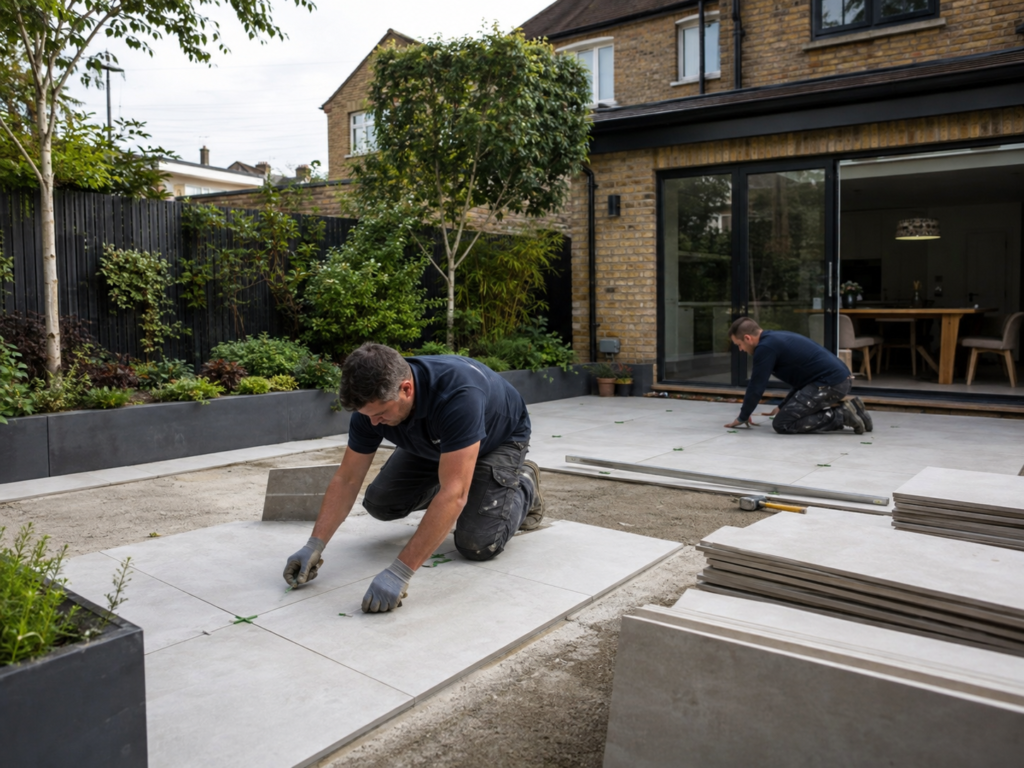
The old paving was removed first. The area was then cleared and prepared for the new patio base. Levels were checked carefully so the patio would sit correctly against the house and drain properly.
A strong base helps prevent movement, dips, and loose slabs. This is especially important in Ireland, where gardens often deal with rain, damp soil, and changing weather.
The preparation included:
- Removing old slabs and waste
- Checking levels from the house to the garden
- Preparing a stable base
- Allowing for suitable drainage falls
- Planning the edges and cuts before laying
This stage is not always the most visible part of the project, but it makes a huge difference to the final result.
Installing the Porcelain Paving
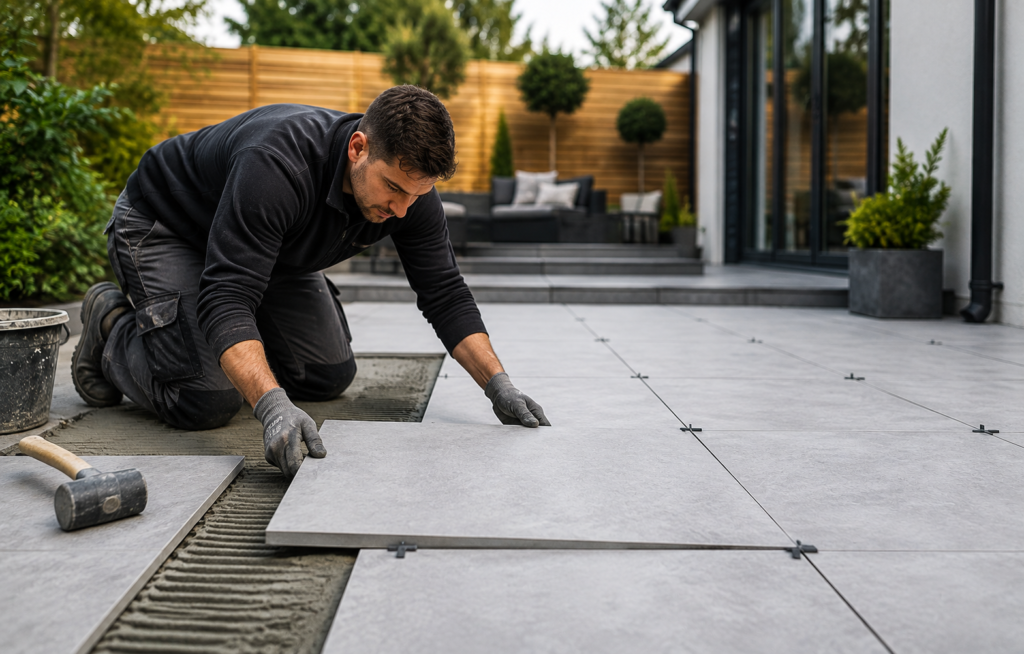
Once the base was ready, the porcelain pavers were laid in a clean, simple pattern. Large pavers were used to make the patio feel more spacious and modern.
Large format porcelain works very well in many Dublin gardens because it reduces the number of joint lines. This can make smaller spaces feel bigger and more open.
The slabs were laid carefully to keep the lines straight and the finish neat. Edges were cut to fit around the house, garden beds, and boundary areas.
The jointing was also important. A neat joint helps complete the look of the patio and reduces gaps where weeds can grow.
The result was a smooth, clean outdoor area that looked much brighter than before.
The Finished Garden
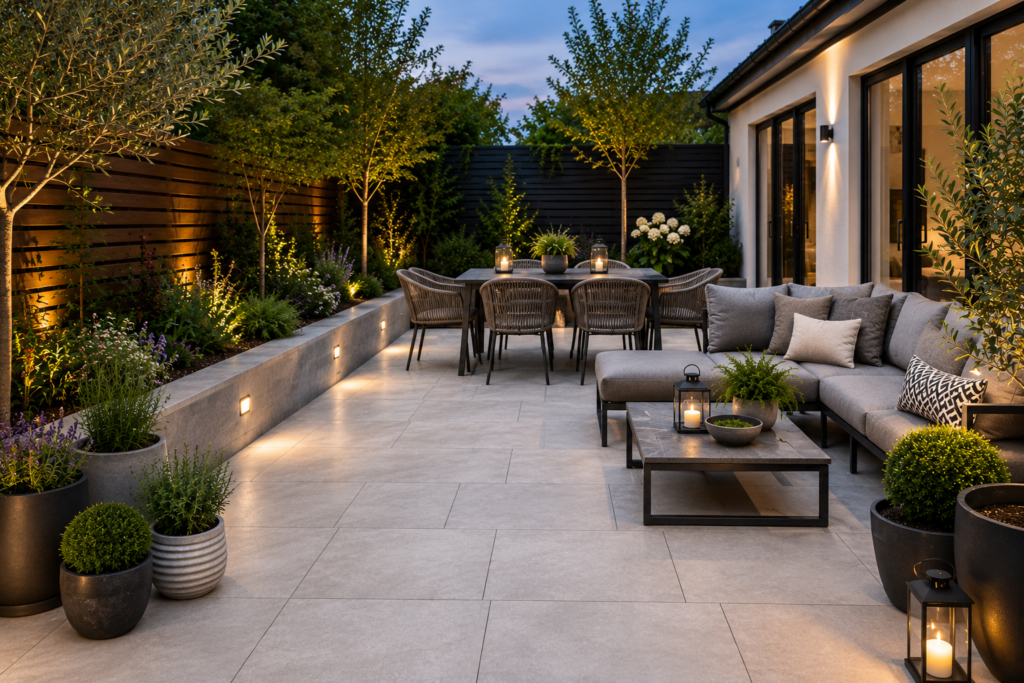
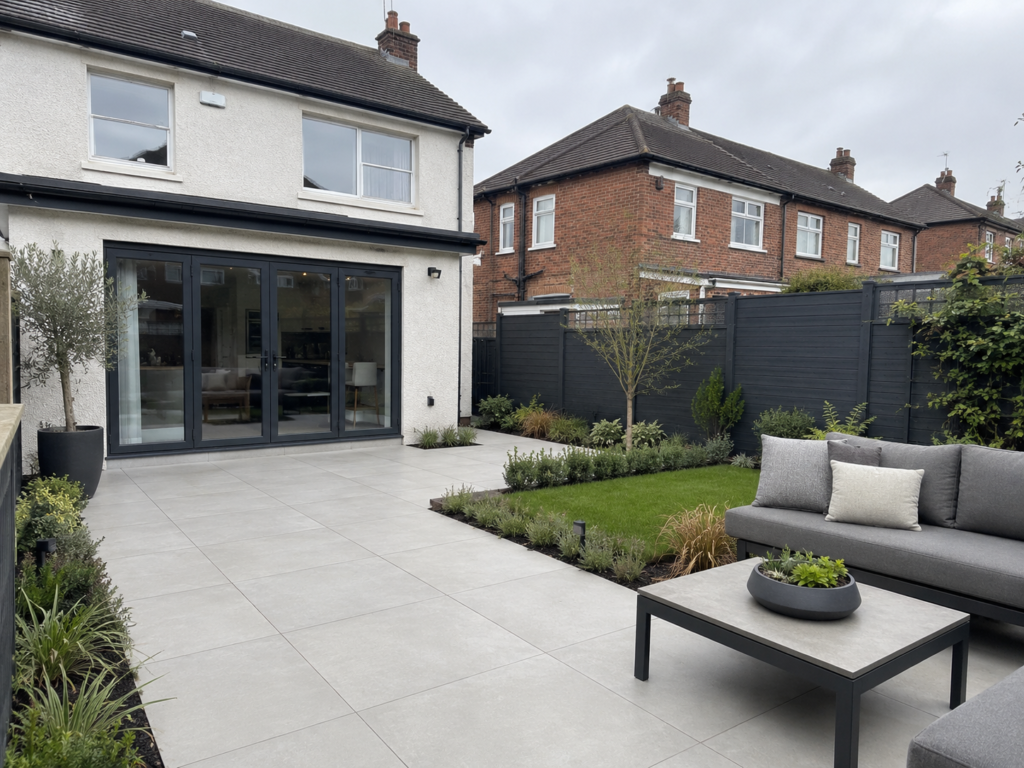
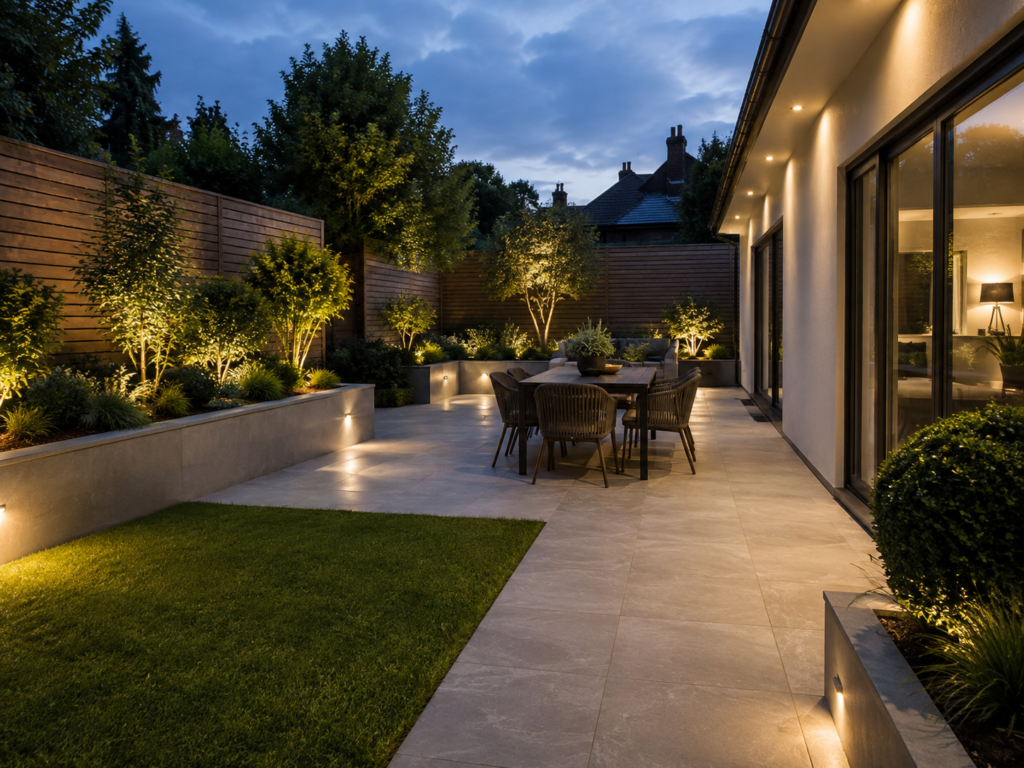
After the porcelain paving was installed, the garden had a completely different feel. The space looked larger, cleaner, and more modern.
The new porcelain patio gave the homeowners a practical area for outdoor dining and relaxing. It also made the garden easier to look after.
The soft stone-effect finish worked well with the house exterior, garden planting, and outdoor furniture. It did not feel too cold or too plain. Instead, it gave the space a calm and natural look.
The biggest improvements were:
- A brighter patio area
- A safer and more even surface
- A cleaner modern finish
- Less maintenance
- Better use of garden space
- A stronger connection between the house and garden
The garden now feels more like an outdoor room, not just a paved area.
Before and After Summary
Area | Before | After |
Patio surface | Old, uneven paving | Clean porcelain pavers |
Maintenance | Weeds and regular cleaning | Easier to keep clean |
Drainage | Water sitting in places | Improved falls and layout |
Style | Dated and dull | Modern stone-effect finish |
Use of space | Limited seating area | Larger patio for dining and relaxing |
Overall feel | Tired garden | Fresh outdoor living space |
Why This Type of Project Works Well in Dublin
Many Dublin gardens are compact, shaded, or close to neighbouring properties. This means the patio design needs to be practical as well as attractive.
Porcelain paving Dublin projects often work best when the design is kept simple. A light or neutral porcelain paver can make a small garden feel brighter. Large format pavers can reduce visual clutter. A good layout can make the space more useful without needing a full garden redesign.
Porcelain patios are also a good fit for Irish weather. When installed correctly, they provide a durable and low-maintenance surface that can handle regular rain and everyday use.
This makes porcelain a strong choice for:
- Family patios
- Outdoor dining areas
- Garden paths
- Side entrances
- Steps and raised areas
- Modern garden makeovers
- Low-maintenance outdoor spaces
What Homeowners Can Learn from This Case Study
This project shows that a garden transformation does not always need to be complicated. A well-planned porcelain patio can make a big difference to how the whole garden looks and feels.
The key lessons are:
- Choose a porcelain colour that suits the house
- Plan the patio around how the space will be used
- Do not ignore drainage and levels
- Use proper outdoor-grade porcelain pavers
- Keep the design simple for a cleaner finish
- Make sure the base is prepared correctly
- Work with installers who understand porcelain paving
Porcelain pavers are a premium paving choice, but the final result depends on the full installation process. The base, layout, cuts, drainage, and jointing all matter.
Final Thoughts
This Dublin garden transformation shows why porcelain pavers are becoming such a popular choice for Irish homes. They offer a clean, modern look while still being practical for daily use and Irish weather.
The old patio was uneven, dated, and harder to maintain. The new porcelain paving created a brighter, safer, and more useful outdoor space.
For homeowners planning porcelain patios, the best results come from good design and proper installation. With the right porcelain pavers, a tired garden can become a stylish outdoor area that is easy to enjoy and simple to maintain.
Frequently Asked Questions?
Are porcelain pavers good for Dublin gardens?
Yes. Porcelain pavers are a good choice for Dublin gardens because they are durable, low maintenance, and suitable for wet Irish weather when installed correctly.
Are porcelain patios easy to maintain?
Yes. Porcelain patios are generally easy to maintain. Regular sweeping and occasional washing are usually enough to keep the surface clean.
Do porcelain pavers get slippery when wet?
Outdoor porcelain pavers are designed with textured finishes to improve grip. It is important to choose porcelain that is suitable for external use.
Can porcelain paving make a small garden look bigger?
Yes. Light colours and large format porcelain pavers can help make a small garden feel more open and less crowded.
How long does a porcelain patio last?
A well-installed porcelain patio can last for many years. The quality of the base, drainage, and installation is just as important as the pavers themselves.